
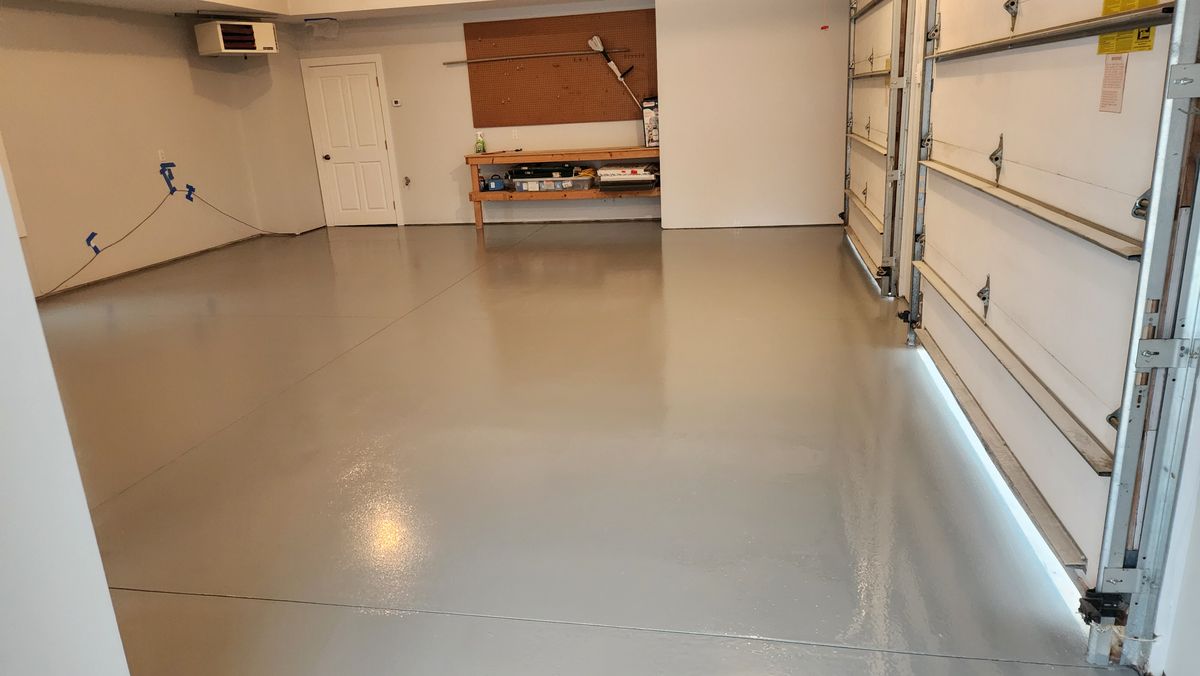
When it comes to high-performance floor coatings, especially for garages, commercial spaces, and industrial facilities, two names consistently rise to the top: epoxy and polyaspartic. While each system has its own strengths, using them together in a professionally designed flooring system can deliver exceptional durability, aesthetics, and long-term value.
In this post, we’ll break down what epoxy and polyaspartic coatings are, and why combining them is often the smartest approach for floor projects.
Understanding Epoxy Floor Coatings
Epoxy is a thermosetting resin that, when mixed and applied properly, forms a rigid, durable plastic surface bonded tightly to concrete. It has been a trusted flooring solution for decades.
Key Benefits of Epoxy
1. Excellent Adhesion to Concrete
Epoxy penetrates and bonds deeply into properly prepared concrete, creating a strong foundation layer.
2. Surface Leveling
Epoxy has self-leveling properties that help smooth minor imperfections in concrete. This makes it ideal as a base coat.
3. Cost-Effective Coverage
Epoxy is generally more affordable per square foot compared to polyaspartic systems, making it an economical base layer for larger areas.
4. Design Flexibility
Epoxy works well with decorative flake systems, metallic pigments, and quartz broadcasts.
However, epoxy has some limitations. It can yellow under UV exposure, takes longer to cure, and may become brittle over time in certain environments.
Understanding Polyaspartic Floor Coatings
Polyaspartic is a type of polyurea coating known for rapid curing and exceptional durability. It’s often used as a topcoat in high-performance flooring systems.
Key Benefits of Polyaspartic
1. UV Stability
Unlike many epoxies, polyaspartic coatings are highly resistant to UV exposure, meaning they won’t yellow or fade over time.
2. Fast Cure Time
Polyaspartic can cure in hours rather than days. This allows for faster project turnaround and minimal downtime.
3. Superior Flexibility
It remains more flexible than epoxy, making it less prone to cracking from temperature changes or substrate movement.
4. Abrasion and Chemical Resistance
Polyaspartic topcoats provide excellent resistance to hot tire pickup, chemicals, and heavy wear.
The downside? Polyaspartic is typically more expensive and less forgiving during installation due to its rapid cure time.
Why Use Epoxy and Polyaspartic Together?
Instead of choosing one over the other, many professional installers use a hybrid system that combines the strengths of both materials.
Here’s why that approach works so well:
1. Stronger Foundation + Tougher Finish
Using epoxy as the base coat allows for superior concrete penetration and leveling. Then, applying a polyaspartic topcoat seals and protects the surface with enhanced durability and UV stability.
This creates a layered system where each product performs the role it does best.
2. Improved Longevity
Epoxy provides structural bonding and build thickness. Polyaspartic adds flexibility and wear resistance. Together, they reduce the risk of:
Peeling
Yellowing
Cracking
Surface wear
The result is a floor that maintains its appearance and performance for years.
3. Better Aesthetic Results
Epoxy holds decorative flakes and metallic effects extremely well. Once the design layer is set, a clear polyaspartic topcoat locks everything in while enhancing gloss and clarity.
Because polyaspartic resists UV damage, light-colored floors stay bright and consistent over time—ideal for garages with open doors or commercial spaces with natural light.
4. Faster Return to Service
While epoxy alone can require longer cure times before full use, a polyaspartic topcoat accelerates the overall project timeline. Many hybrid systems allow for:
Next-day foot traffic
Rapid return to vehicle traffic
For businesses and homeowners alike, reduced downtime is a major advantage.
5. Enhanced Protection in High-Stress Environments
In environments exposed to:
Heavy vehicles
Chemical spills
Moisture
Temperature fluctuations
The combination system outperforms single-material installations. The epoxy anchors the system; the polyaspartic shields it.
Ideal Applications for Hybrid Systems
Using epoxy and polyaspartic together is especially beneficial for:
Residential garages
Auto shops
Warehouses
Retail spaces
Showrooms
Commercial kitchens
Anywhere durability, aesthetics, and efficiency matter, this combination system delivers.
Final Thoughts
Epoxy and polyaspartic coatings are both excellent flooring solutions—but together, they form a high-performance system that maximizes the strengths of each material while minimizing their weaknesses.
If you're planning a floor project and want:
Long-term durability
Professional appearance
Faster installation
UV stability
Superior protection
A hybrid epoxy + polyaspartic system is often the smartest investment.
When installed correctly over properly prepared concrete, this layered approach can transform ordinary concrete into a seamless, high-performance surface built to last.